Hospital Simulator
An agent-based simulation of an acute hospital, developed to explore how healthcare services work, test research designs and support clinical education.
The Hospital Simulator models how patients, clinicians, beds and tasks interact over time. Users can alter staffing levels, workload and care processes, then observe what happens to care delivery and simulated patient outcomes. A teaching interface allows learners to take the role of a doctor or nurse, while a separate interactive model explores human physiology.
Health services research
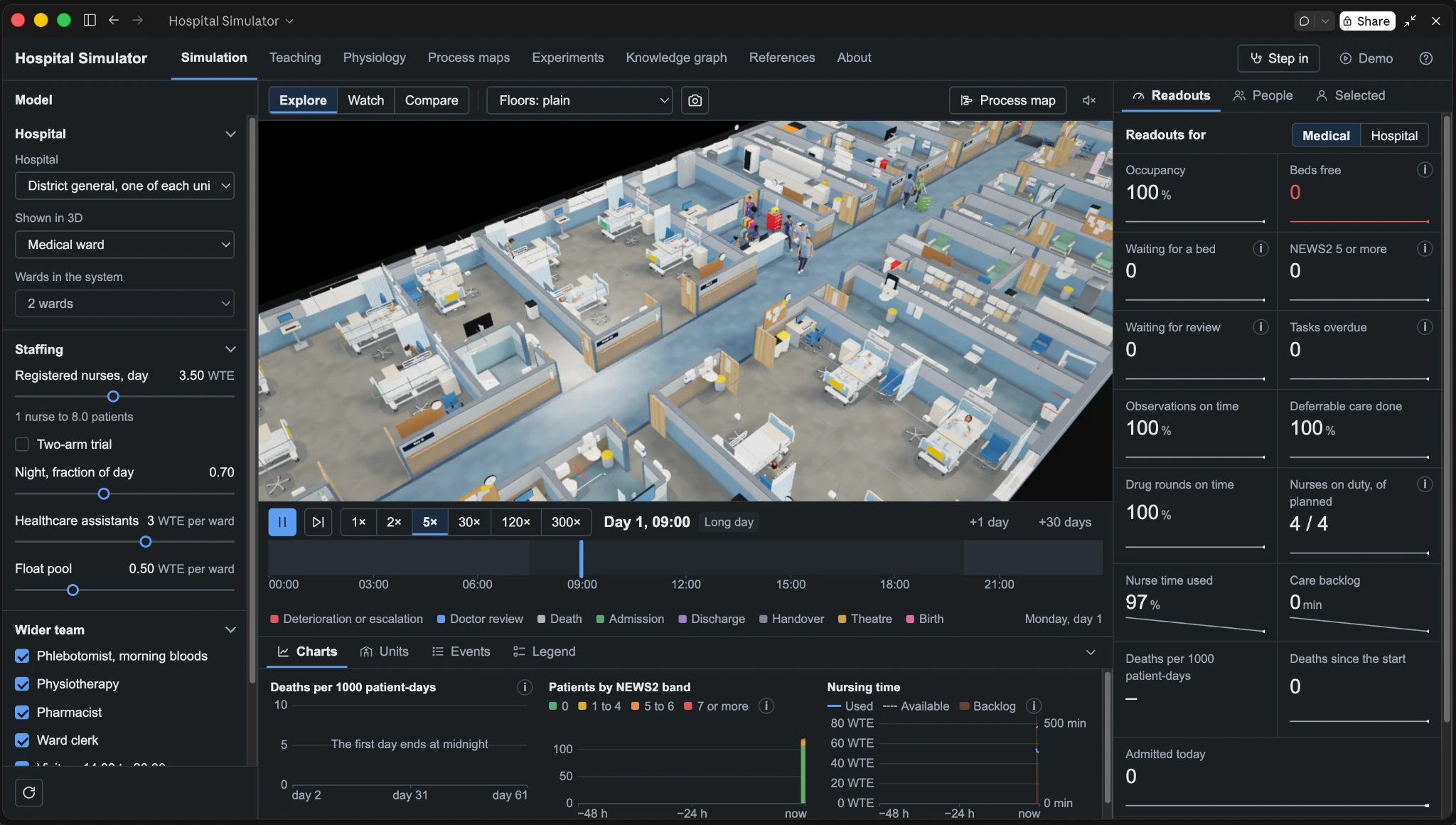
The simulated hospital represents registered nurses, healthcare assistants, doctors and a wider clinical team. Staff work through observations, medicine rounds, routine care, reviews and escalating patient deterioration. The model also includes shift patterns, handovers, admissions, transfers, discharges and the ways wards adapt when demand exceeds the staff time available.
Its 3D view shows the running hospital, while controls and readouts reveal the effects of staffing, patient flow and clinical decisions. Users can compare alternative working arrangements and observe how workload, delayed tasks and simulated outcomes change.
Virtual trials
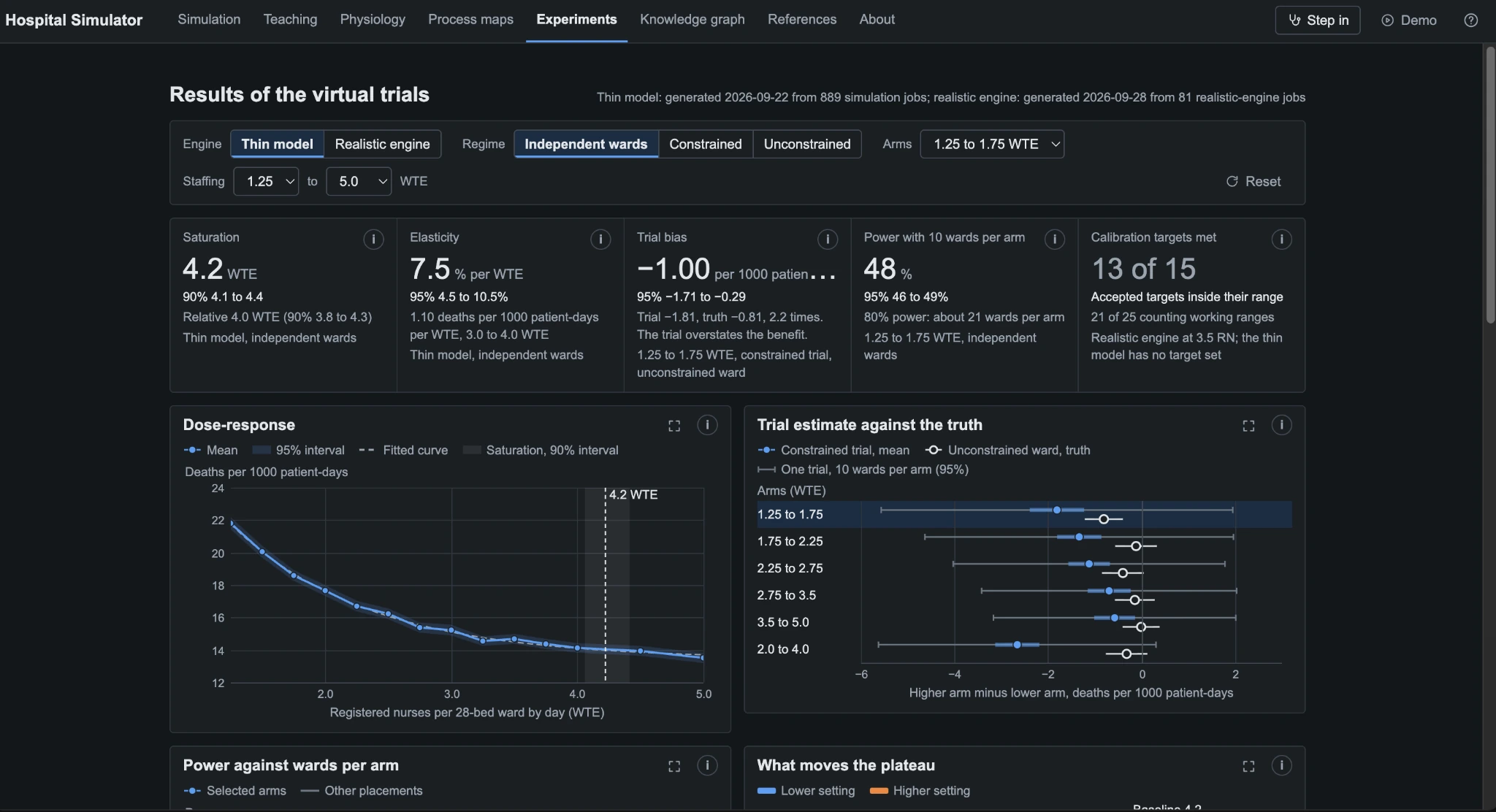
An important research use is to test study designs against effects that are known within the simulation. Its first application is nurse staffing: how a trial comparing two levels of registered nurse staffing estimates an effect, and how that estimate differs from the underlying staffing–mortality relationship in the model.
The experiments explore dose–response relationships, uncertainty, statistical power and the consequences of constrained staffing.
Clinical education
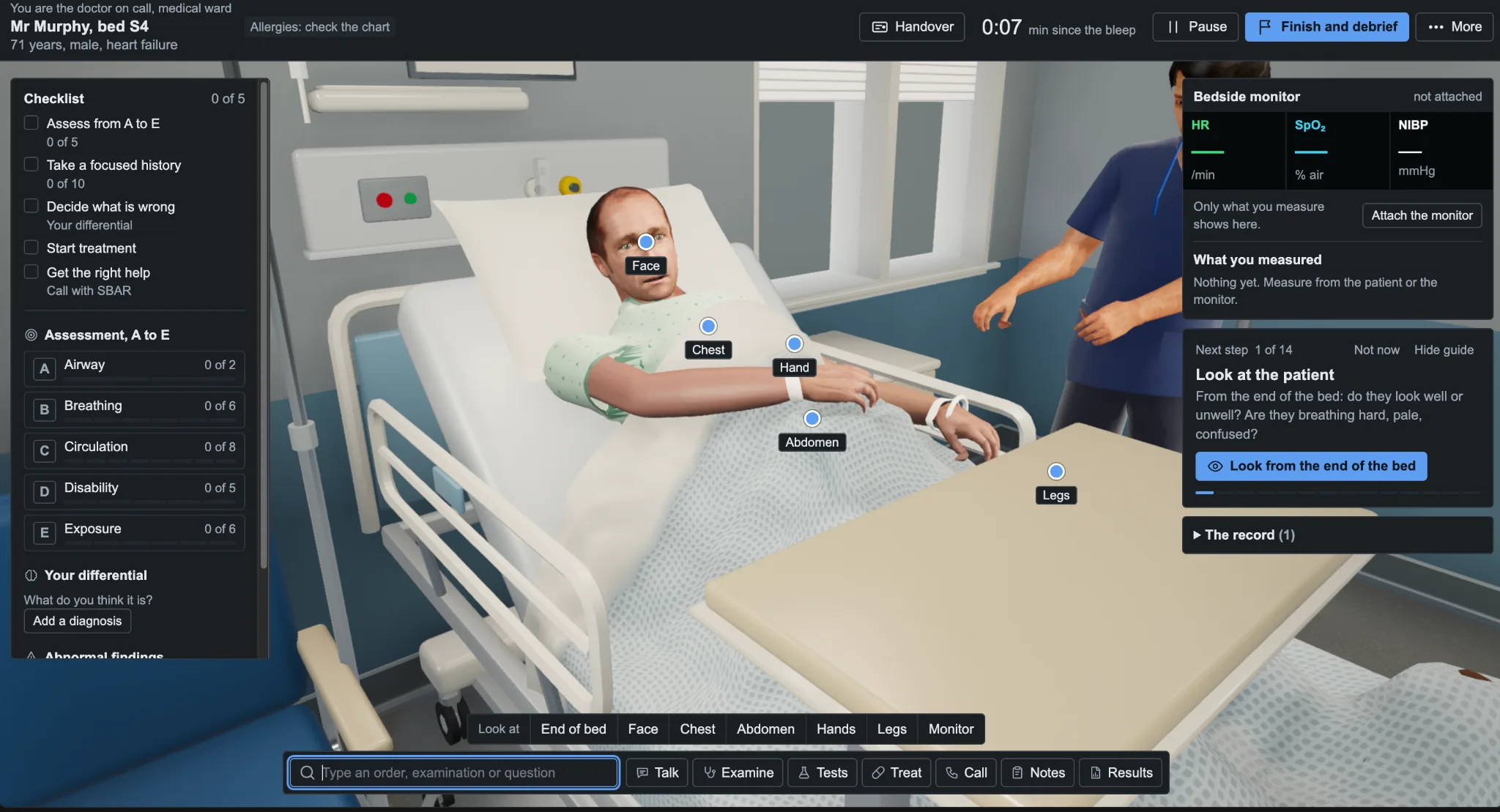
In Step in , a learner takes over the role of a simulated doctor or registered nurse while the rest of the hospital continues to run. As a doctor, the learner assesses and manages a deteriorating patient or responds to calls during a ward shift. As a nurse, they prioritise observations, medication rounds, clinical care, call bells and escalation.
In the doctor experience, the learner can assess the patient from the end of the bed, take a history, examine specific body areas, request investigations, prescribe treatment and call for help. The timing and sequence of actions matter because the patient's simulated condition continues to evolve.
Teaching and assessment tools
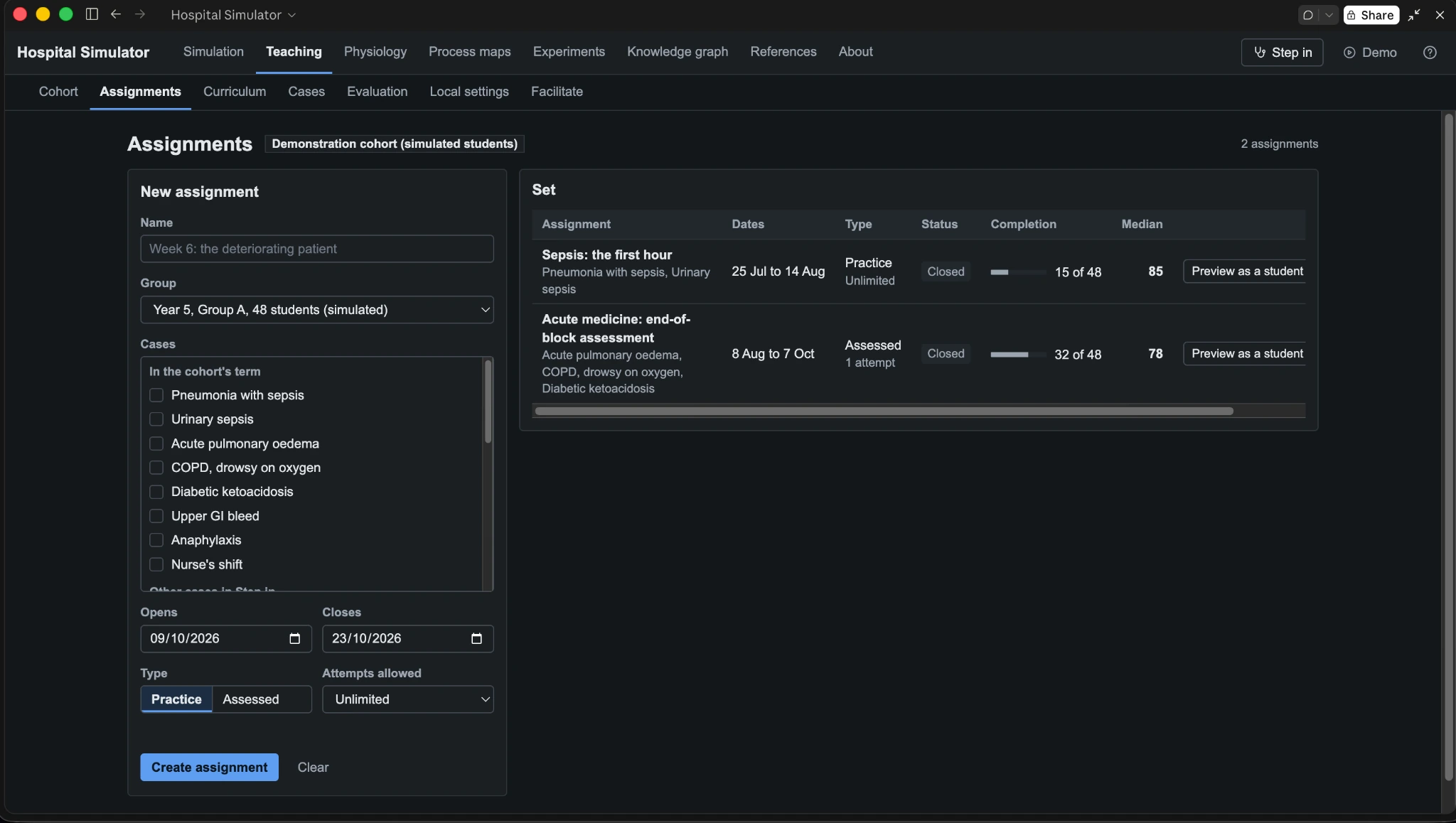
The Teaching area prototypes features for medical and nursing educators: cohort reporting, case assignments, curriculum mapping, case authoring, evaluation and facilitated group sessions. A debrief compares learners' decisions with reference actions drawn from published clinical guidance.
Interactive physiology
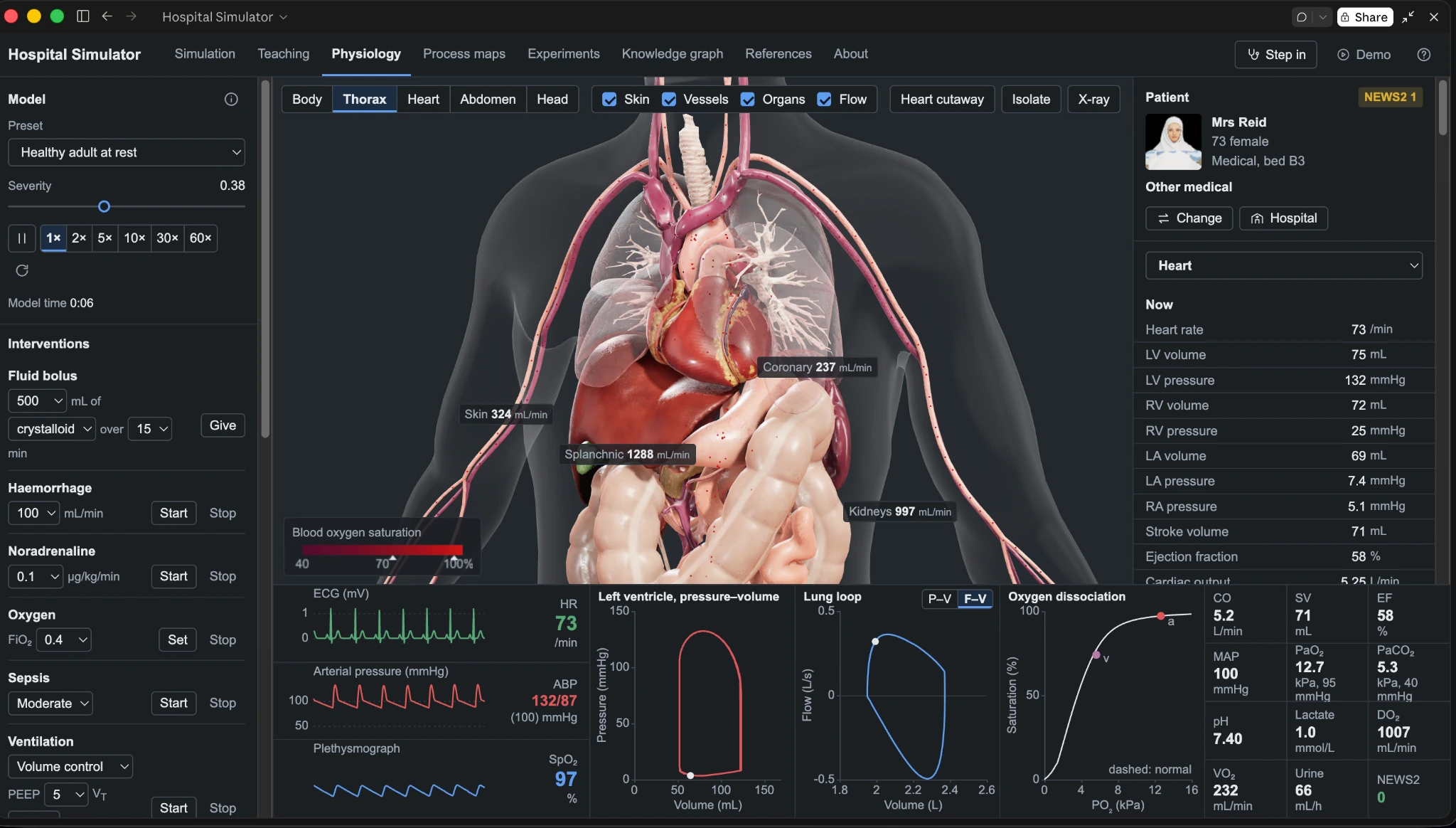
A separate lumped-parameter model represents an individual patient's circulation, respiration, gas transport, acid–base balance, metabolism and body fluids. Users can introduce haemorrhage, sepsis or other disturbances and test interventions such as intravenous fluids, oxygen, noradrenaline and mechanical ventilation.
Its physiological state is displayed through an interactive 3D anatomy and live measurements. The model can follow a patient from the running hospital, linking changes in the simulated clinical condition with changes in circulation, breathing and oxygen delivery.
Clinical knowledge base
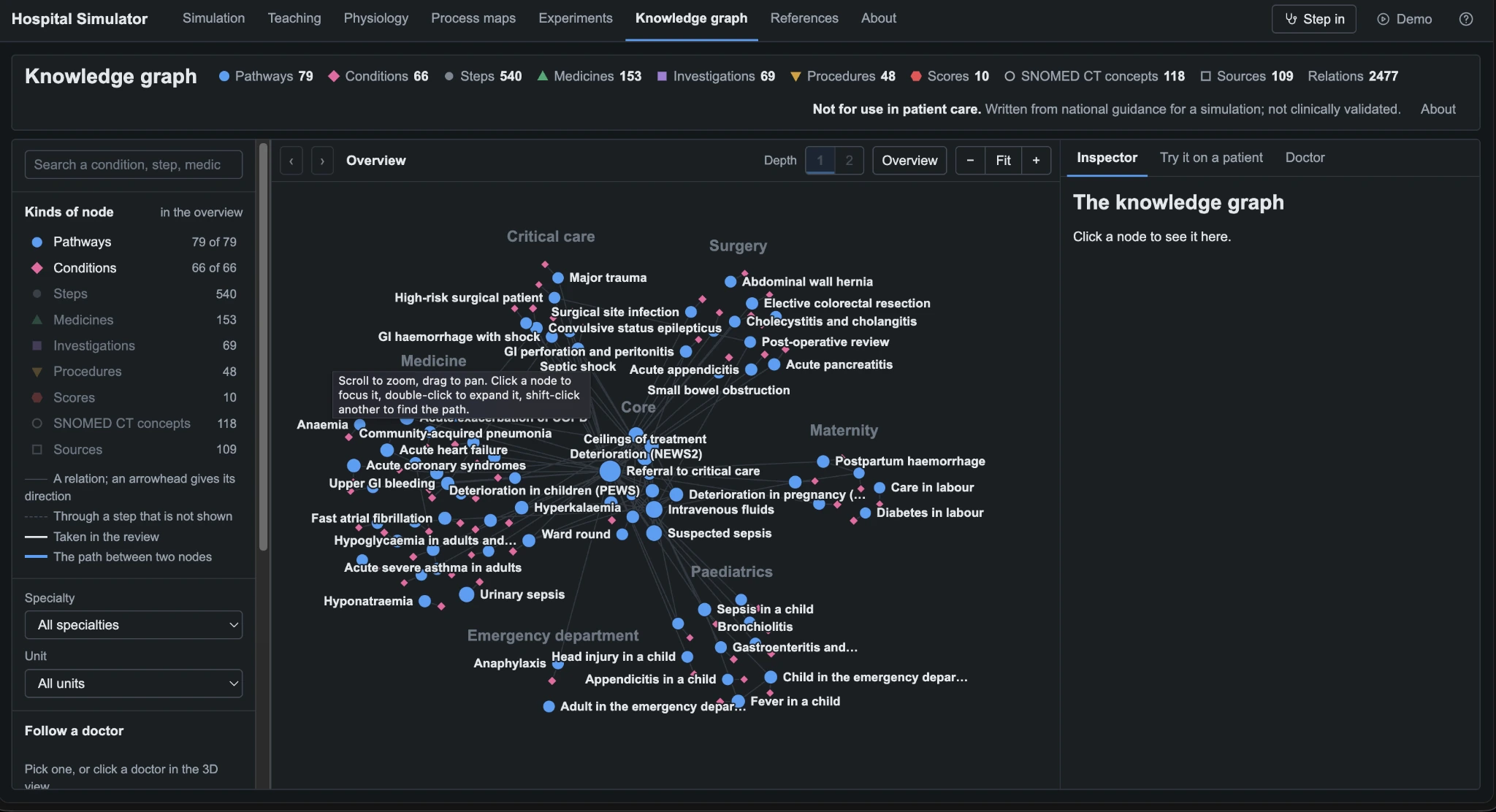
Simulated doctors make decisions using a structured knowledge base of clinical pathways. It connects working diagnoses, observations, investigations, medicines, referrals and guidance sources. Users can explore these links through a knowledge graph and see how the system works through a patient review.
© Dr Chris Paton